Auto & Manual Focus
Listen to this lesson.
Unit 6, Lesson 1: Auto & Manual Focus
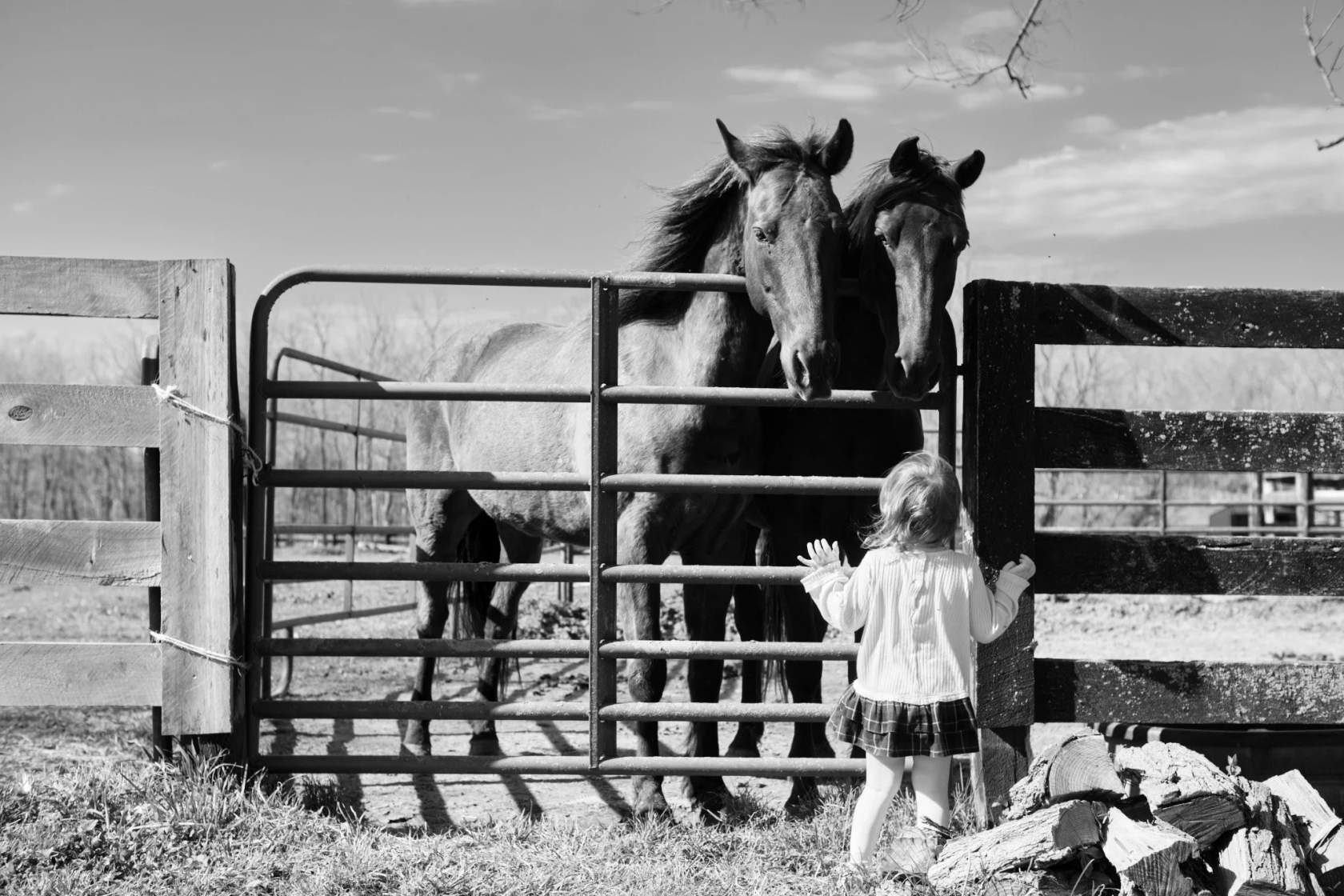
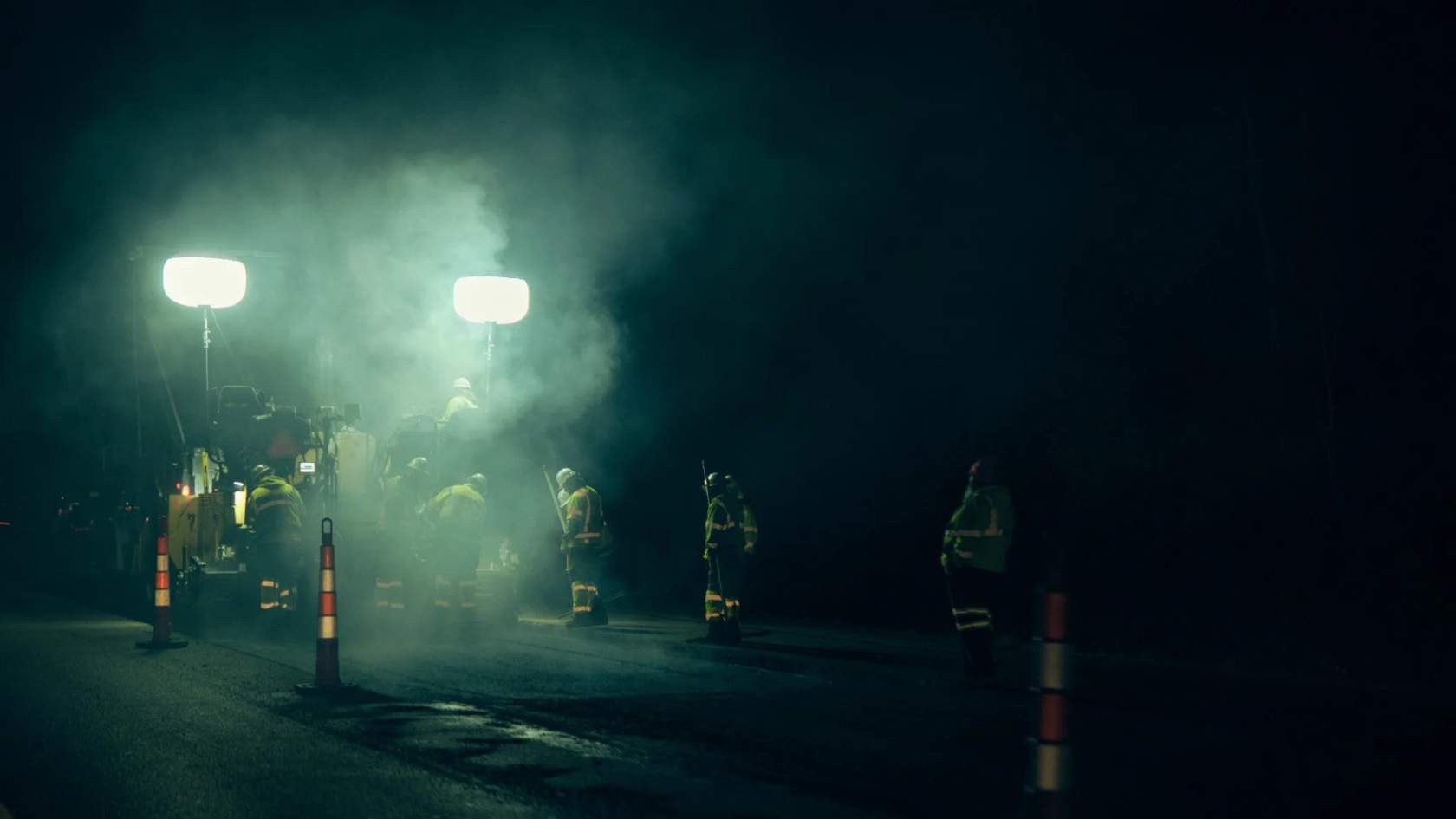
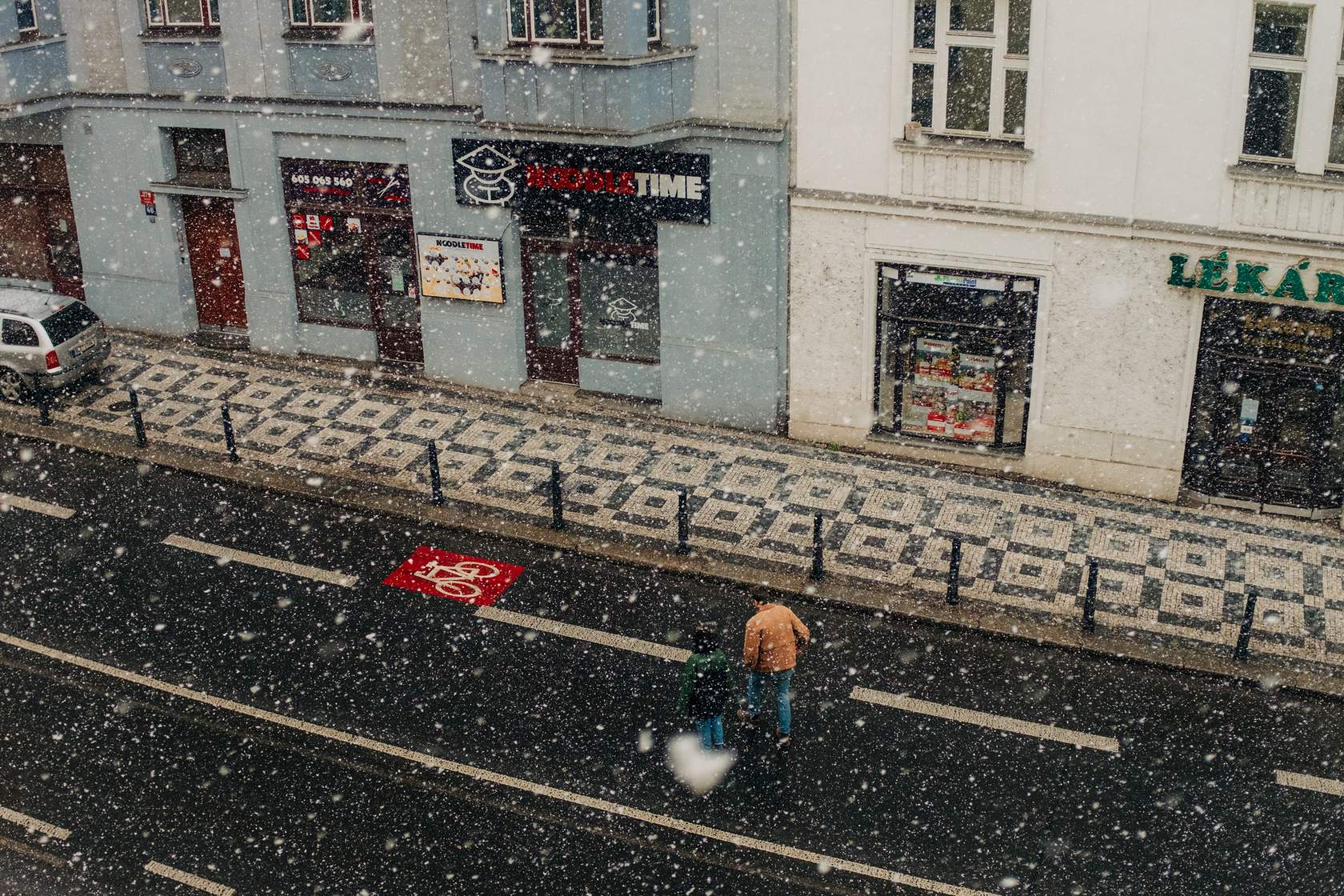
Choosing the right focus mode will make your life as a photographer endlessly easier. Looking at the above photo, what do you think would have been the best choice: auto or manual focus?
Autofocus
By now, you are likely familiar with the basics of focusing your camera: half-press the shutter release, the camera focuses, finish pressing to fire. That really is the core of it.
There's a lot more to focusing though, and the knowledge can be incredibly helpful in speeding up your workflow and getting more out of your gear. Between the various focusing modes and types of autofocus, understanding the differences and limitations of each gives you more control over your results.
Phase Detect vs. Contrast
The two primary autofocus methods are contrast detection and phase detection. Contrast detection is fairly self-explanatory: the camera detects areas of high contrast and shifts focus until that area has the sharpest possible boundary between tones.
Phase detection works more like a rangefinder. Light from the edges of the lens is picked up by separate sensors (multiple focusing sensors are incorporated into the imaging sensor), and when the signals converge, the subject is considered in focus.
So what does this mean?
Cameras with contrast detect autofocus focus on areas of high contrast. Focusing on areas of lower contrast, due to similar lighting, low light, or a general lack of tonal variation, will cause the sensor to struggle. Phase detection is generally faster and more reliable because it's aligning areas of contrast rather than judging purely on how much contrast exists. It will still struggle in low light or with low tonal variation, but for most shooting conditions it's the more consistent of the two.
Autofocus Modes
There are also differences in how the camera applies focus. The most significant distinction, found across virtually all camera systems, is between single focus and continuous focus. Canon users will know these as One-Shot and AI Servo; Nikon and Sony users as AF-S and AF-C.
Single Focus (One-Shot / AF-S): When the camera focuses in this mode, it locks focus and holds it until the photo is taken or the shutter button is fully released. It works well for still subjects and for focus-and-recompose, and is a reliable choice for many situations.
Continuous Focus (AI Servo / AF-C): This mode keeps adjusting focus continuously until the shutter is fully depressed, tracking subjects as they move through the frame. It's the natural choice for pets, children, athletes, or anything in motion. It also works well for static subjects, since it can compensate if the subject shifts slightly before you fire. Many photographers use AF-C as their default for this reason. Like most things in photography, the best mode is the one that fits your shooting style, and both are worth experimenting with.
Eye, Face, and Tracking: Many cameras in the past decade have added face and eye detection, with improving accuracy for both people and animals. This doesn't change which focus mode is in use, but it allows for more precise focus acquisition without manually adjusting focus points. Particularly useful for subjects in motion or subjects likely to move suddenly, face and eye tracking can acquire and hold focus quickly in situations where hunting for a focus point manually would cost you the shot.
Manual Focus (with an autofocus lens): For most day-to-day shooting, this option rarely comes up. Most cameras require a menu dive to enable manual focus alongside autofocus, which is a good indication of how often it's actually needed. Where it does come in useful is fine-tuning: if a high-contrast area near your subject is pulling focus, if the subject shifted slightly during autofocus, or if focus-and-recompose introduced a small error, nudging focus manually can take a shot from close to perfect.
Back Button Focus (BBF): BBF decouples focus from the shutter button and maps it to a separate button on the back of the camera, typically the AF-L or a dedicated BBF button depending on the camera.
The practical effect is that focus and exposure are controlled independently. Many photographers find this useful for events and fast-moving subjects: lock onto a subject with AF-C using the back button, recompose freely, and fire without the camera attempting to refocus. It also suits landscape work, keeping focus locked without holding anything down while composition is fine-tuned, similar to AF-L but without the held button.
Most cameras require setting up BBF through the menu, though some allow it by switching the lens to manual focus mode, with the AF-L button taking over focusing duties.
BBF is a workflow preference. Some photographers use it exclusively; others find the standard half-press setup works perfectly well for them. It's worth trying for an afternoon to see if it clicks.
Choosing the right focus mode will make your life as a photographer endlessly easier.
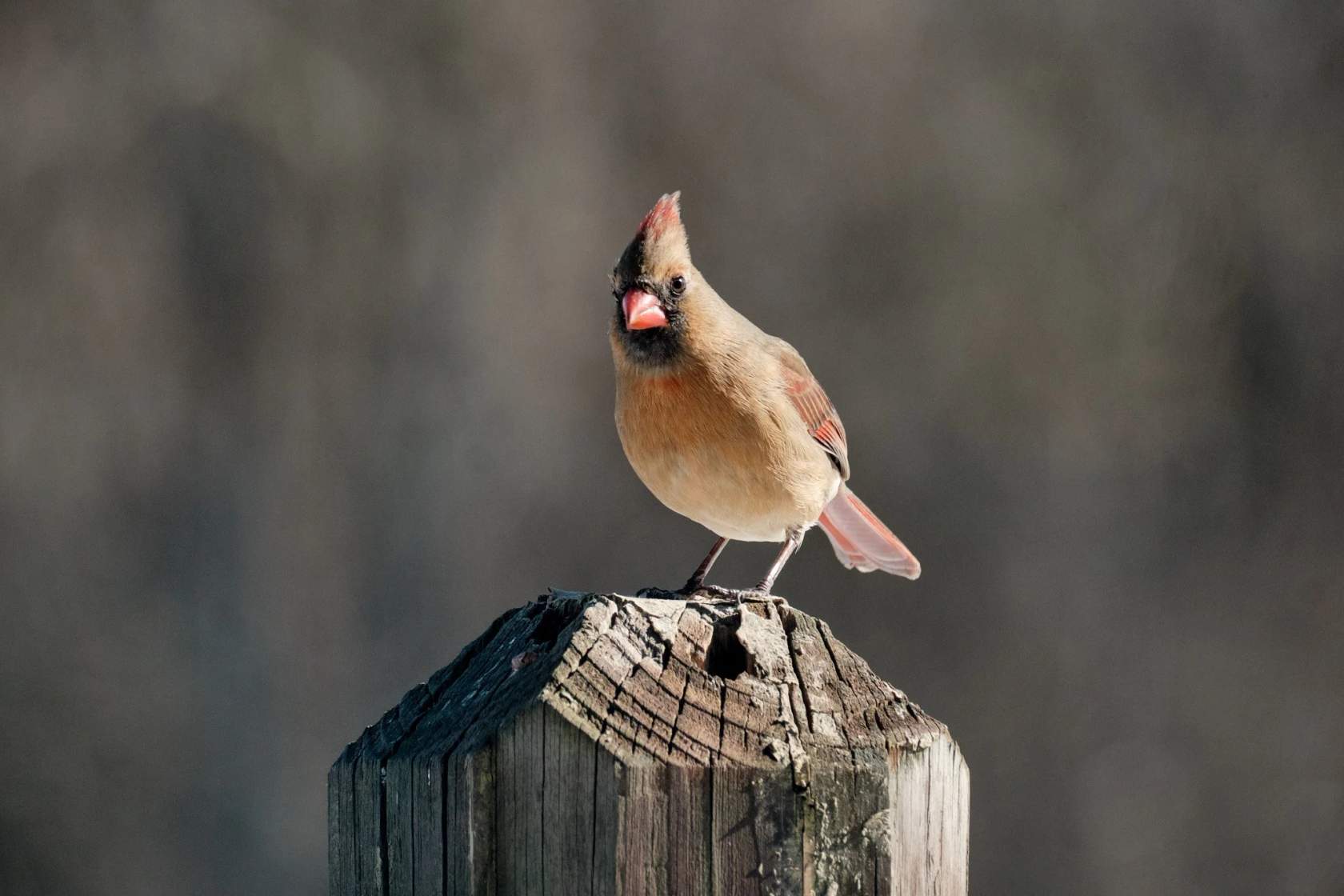
Looking at this photo, what do you think would have been the best choice: auto or manual focus?
Autofocus
By now, you are likely familiar with the basics of focusing your camera: half-press the shutter release, the camera focuses, finish pressing to fire. That really is the core of it.
There's a lot more to focusing though, and the knowledge can be incredibly helpful in speeding up your workflow and getting more out of your gear. Between the various focusing modes and types of autofocus, understanding the differences and limitations of each gives you more control over your results.
Phase Detect vs. Contrast
The two primary autofocus methods are contrast detection and phase detection.
Contrast detection is fairly self-explanatory: the camera detects areas of high contrast and shifts focus until that area has the sharpest possible boundary between tones.
Here's how phase detection works:
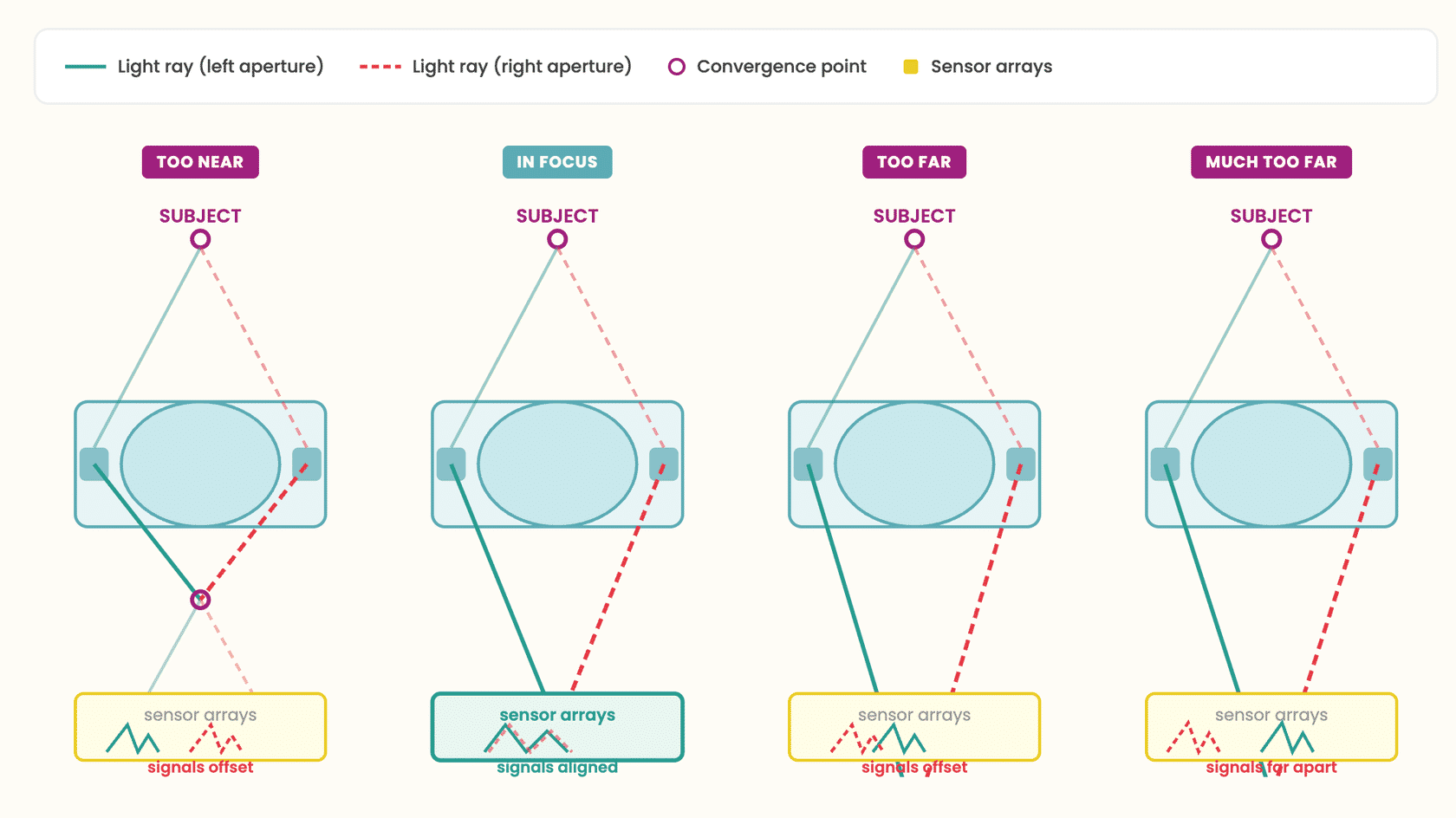
When focus is correct (Fig 2)
Both light rays converge at exactly the same point on the sensor. The two sensor profiles match perfectly. The camera knows focus is locked.
When focus is off (Fig 1, 3, 4)
The rays converge either before or beyond the sensor, so the two profiles land at different points. The offset tells the camera which direction to adjust, and by how much.
Too Near vs. Too Far
The direction of the offset reveals which way the lens needs to move. In figure 1 the green profile leads; in figure 3 the red leads. This is what makes phase detection fast: it doesn't hunt, it knows.
Contrast detection has to search for sharpness by moving the lens back and forth.
Phase detection calculates the correction directly from the offset, which is why it's faster and more reliable in most conditions.
Autofocus Modes
There are also differences in how the camera applies focus. The most significant distinction, found across virtually all camera systems, is between single focus and continuous focus. Canon users will know these as One-Shot and AI Servo; Nikon and Sony users as AF-S and AF-C.
Click each '+' to learn more.
When the camera focuses in this mode, it locks focus and holds it until the photo is taken or the shutter button is fully released.
It works well for still subjects and for focus-and-recompose, and is a reliable choice for many situations.
This mode keeps adjusting focus continuously until the shutter is fully depressed, tracking subjects as they move through the frame.
It's the natural choice for pets, children, athletes, or anything in motion. It also works well for static subjects, since it can compensate if the subject shifts slightly before you fire.
Many photographers use AF-C as their default for this reason. Like most things in photography, the best mode is the one that fits your shooting style, and both are worth experimenting with.
Many cameras in the past decade have added face and eye detection, with improving accuracy for both people and animals.
This doesn't change which focus mode is in use, but it allows for more precise focus acquisition without manually adjusting focus points.
Particularly useful for subjects in motion or subjects likely to move suddenly, face and eye tracking can acquire and hold focus quickly in situations where hunting for a focus point manually would cost you the shot.
For most day-to-day shooting, this option rarely comes up. Most cameras require a menu dive to enable manual focus alongside autofocus, which is a good indication of how often it's actually needed.
Where it does come in useful is fine-tuning: if a high-contrast area near your subject is pulling focus, if the subject shifted slightly during autofocus, or if focus-and-recompose introduced a small error, nudging focus manually can take a shot from close to perfect.
BBF decouples focus from the shutter button and maps it to a separate button on the back of the camera, typically the AF-L or a dedicated BBF button depending on the camera.
The practical effect is that focus and exposure are controlled independently. Many photographers find this useful for events and fast-moving subjects: lock onto a subject with AF-C using the back button, recompose freely, and fire without the camera attempting to refocus.
It also suits landscape work, keeping focus locked without holding anything down while composition is fine-tuned, similar to AF-L but without the held button.
Most cameras require setting up BBF through the menu, though some allow it by switching the lens to manual focus mode, with the AF-L button taking over focusing duties.
BBF is a workflow preference. Some photographers use it exclusively; others find the standard half-press setup works perfectly well for them. It's worth trying for an afternoon to see if it clicks.
Focus modes are tools, not rules. The best one for any situation is whichever one gets you the shot you're after.